
Choosing the best EV charger for homes sounds like it should be simple. Pick a charger, get it fitted, plug in the car and away you go.
In practice, the best option is not always the most expensive charger, the smallest unit, or the one with the flashiest app. It is the charger that suits your car, your parking setup, your electricity supply, your tariff and the way you actually drive.
That is where we come in. At The Full EV, we help you compare the practical options before choosing a charger. A home charger should make EV ownership easier, not give you another gadget to argue with before breakfast.
In practice, the right recommendation usually starts with the basics: where the car is parked, where the charger can be mounted, how often you charge and whether your electrical setup can support the charger you want.
What does “best” actually mean?
The best EV charger for one home may not be the best for another.
Some drivers want the easiest possible daily charging setup. Others care more about a neat finish on the wall. Some want solar compatibility. Others simply want a reliable charger that works well with cheaper overnight electricity.
So, rather than pretending there is one perfect charger for everyone, it is better to think about the best charger by use case.
A good home EV charger should usually offer:
- Reliable everyday charging
- Smart scheduling
- A practical cable setup
- Clear app control
- Load balancing
- Vehicle compatibility
- Solar compatibility, if needed
- Strong manufacturer support
A charger does not need to be fancy to be good. It needs to work properly every time.
What is the best EV charger for most homes?
For most homes, the best EV charger is likely to be a smart 7kW wall-mounted charger.
That does not mean every home needs the same model. The right choice still depends on your car, parking position, electricity supply, cable preference and whether you want features such as solar compatibility or tariff scheduling.
But as a practical all-round option, a smart 7kW charger gives most drivers the right balance of charging speed, everyday convenience, safety features and control.
Most domestic home chargers are around 7kW because that suits a typical single-phase electrical supply. Some chargers are advertised as 22kW, but that higher speed usually requires a three-phase supply. Your vehicle also needs to be able to accept that charging speed.
A 22kW charger only makes sense where the property supply, charger and vehicle can all support that speed. If one part of the setup cannot, the real-world charging speed will be lower.
Our 7kW vs 22kW EV charging guide explains the difference in more detail, but the short version is simple: 22kW sounds appealing, yet it is only useful if your home and vehicle can actually support it.
For most households, 7kW is the sensible starting point.
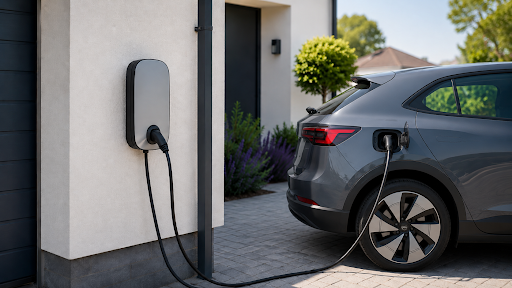
Best EV charger types for different homes
Different homes need different charging setups. Here is the practical way to think about it.
| Home charging needs | Best charger type | Why does it make sense |
| Everyday convenience | Smart 7kW tethered charger | The cable is always ready to use |
| Neater appearance | Smart 7kW untethered charger | Cleaner look when not charging |
| Solar-ready setup | Solar-compatible smart charger | Can make better use of surplus solar energy |
| Smaller wall space | Compact smart charger | Easier to place discreetly |
| Future flexibility | Untethered or solar-compatible charger | Useful if your vehicle or energy setup changes |
There is no single winner for every driveway, wall or charging routine. The right charger is the one that fits the way you actually use your car.
Best for everyday convenience – tethered charger
A tethered charger has the charging cable permanently attached to the unit. For many homes, this is the easiest option.
You park, grab the cable, plug in and walk away. No getting the cable out of the boot. No coiling and uncoiling every time, no wondering where you left it.
The downside is that the cable is always visible. If the charger is fitted somewhere prominent, that may matter. If convenience is the priority, tethered usually wins.
Our guide to tethered vs untethered EV chargers looks at both options in more detail, but for regular home charging, tethered is often the most practical choice.
Best for a tidy finish – untethered charger
An untethered charger has a socket rather than a fixed cable. You plug your own cable into the charger when you need it. This can be a good option if you want a cleaner look on the wall. It may also suit drivers who want more flexibility if they change vehicles later.
The trade-off is convenience. You need to get the cable out each time, then put it away again afterwards. It is not difficult, but if you charge often, the old “grab it and plug it in” approach has its charm.
Best for solar homes: solar-compatible charger
If you already have solar panels or you may add them later, a solar-compatible EV charger is worth considering.
Some chargers can prioritise surplus solar energy, helping you use more of what your panels generate. This does not mean your car will always charge for free. Solar output changes with weather, season and household demand. Still, the right setup can make home charging smarter and more efficient.
The Energy Saving Trust’s electric vehicle charging guidance is a useful independent resource if you want to understand charger types, running costs and support in more detail. If solar is part of your long-term plan, it is better to choose a suitable charger now rather than replace the unit later. You may also want to consider how your charger could work alongside battery storage as part of a broader home energy setup.
Best for lower running costs – a charger with tariff scheduling
A smart charger becomes far more useful when it works neatly with your electricity tariff.
Many EV drivers charge overnight because that is when cheaper rates are often available. A good charger lets you schedule charging so the car charges at the right time, rather than starting the moment you plug it in.
Before choosing a charger, check whether it can support:
- Scheduled charging
- Tariff integration
- Energy usage tracking
- Remote control through an app
- Charging history
Our EV tariff guide is worth reading before choosing a charger, especially if you want your setup to work smoothly with cheaper charging periods.
A good smart charger does more than move electricity into the battery. It helps you choose when that electricity is used.
Best for safety and practicality – charger with load balancing
Load balancing is not the most exciting feature, but it is one of the most useful.
It helps manage how much power your charger draws compared with the rest of your home. For example, if several high-demand appliances are running at once, the charger can reduce its output to help avoid overloading the supply.
A good home charger should also meet current smart charging requirements. The government’s smart charge point regulations explain why private charge points must include smart functionality, including features designed to support charging at better times for the energy system. This is why we never like guesswork. The charger itself matters, but the installation matters just as much.
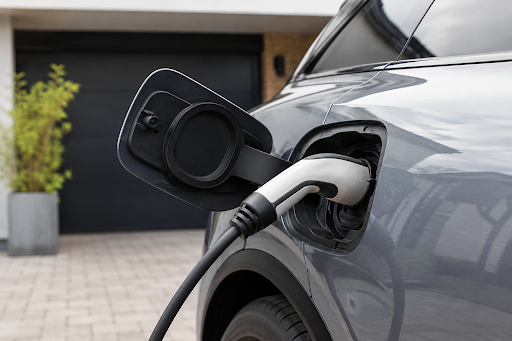
What should the best home EV charger include?
A good home charger should quietly do its job, without making you babysit an app every evening.
Before choosing one, look for:
- 7kW charging for everyday home use
- Smart scheduling
- A simple, reliable app
- Load balancing
- Clear charging status
- Tethered or untethered options
- Solar compatibility, if relevant
- Strong warranty and support
- Professional installation suited to your home setup
A charger that ticks these boxes will usually be a better choice than one that simply looks impressive online.
What about EV charger grants?
Some households may be eligible for support towards a home charge point, depending on property type, parking setup and current rules. The official electric vehicle chargepoint grant guidance explains who can apply and what the grant can cover. It is worth checking before booking an installation, as eligibility can be specific.
We would always recommend checking current guidance rather than relying on old advice. Grants change, and nobody wants to miss useful support because they read something out of date.
What should you avoid?
Not every charger is a good fit for every home. Be careful with:
- Very cheap chargers with limited support
- Units with poor app performance
- Chargers that do not suit your parking position
- Short cables that will not comfortably reach your car
- Paying extra for 22kW when you cannot use it
- Choosing a charger before checking your electrical setup
- Installers who quote without asking enough questions
The best charger is the one that gives you the features you will actually use, without paying for speed or extras your home cannot support.
How we can help you choose the right home charger
Once you know what type of charger might suit you, the next step is making sure the installation is right. That is where our home EV charger installation service comes in.
The Full EV provides EV charger consultancy, advice and installation for domestic and commercial charging, as well as solar PV and battery storage solutions. For a home charging setup, we help you look at the full picture, including your parking setup, cable route, charging habits, electricity supply and plans.
From there, we can recommend a practical charger option and arrange an installation suited to your home and charging needs.
If you want a charger that suits your home rather than just looking good on a product page, our team can help you take the next step with confidence.
So, what is the best EV charger for homes?
For most households, the best EV charger is a smart 7kW wall-mounted charger.
If you want everyday ease, choose a tethered version. If you prefer a neater finish, go untethered. If you have or plan to add solar panels, choose a solar-compatible charger. If running costs are a priority, make sure the charger works well with smart scheduling and EV tariffs.
The best charger is not always the one with the biggest advertised charging speed or the longest feature list. It is the one that fits your car, your home and your routine.
Ready to choose your home charger?
If the charger options are starting to blur into one another, you are not the first person to feel that way. There are plenty of options, and the spec sheets do not always make things clearer.
We can help you compare the sensible choices, check your home setup and recommend a charger installation that suits the way you live and drive.
Get in touch with The Full EV when you are ready to choose a practical, reliable home charging setup.
FAQs about the best EV charger for homes
What is the best EV charger for home use?
For most homes, the best option is a smart 7kW charger with app control, scheduling, load balancing and a cable setup that suits how you park.
Is 7kW enough for home EV charging?
Yes, 7kW is enough for most home EV charging needs. It is well-suited to overnight charging and everyday driving habits.
Is a tethered charger better than an untethered charger?
A tethered charger is usually more convenient because the cable is always attached. An untethered charger looks tidier and can offer more flexibility.
Should I get a solar-compatible EV charger?
A solar-compatible charger is worth considering if you already have solar panels or may add them later. It can help you make better use of surplus solar energy.
Can I use a 3-pin plug instead of a home charger?
A 3-pin plug can be used in some situations, but it is slow and not ideal as a regular long-term charging setup. A dedicated home charger is the better everyday option.

