
EV charging can be a good step for businesses. It can support staff, visitors, customers and company vehicles, while making it easier for people to choose electric.
But the words around it matter.
That is why “what is greenwashing” is not just a marketing question. It is a trust question. If a business installs EV chargers and then makes vague or oversized environmental claims, the message can quickly start doing more harm than good.
There is nothing wrong with talking about positive action. In fact, businesses should communicate useful changes clearly. The key is to say what has actually been done, explain what it means, and avoid expecting the charger to prove more than it actually does.
Two charge points in a car park are useful. They are not, on their own, a golden ticket to claim the whole business has become “green”. That is where the old-fashioned virtue of plain speaking comes in handy.
What Is Greenwashing?
Greenwashing is when an environmental claim gives people a misleading impression about a business, product, service or action.
It can happen through:
- Website copy
- Advertising
- Social media posts
- Sustainability reports
- Charger signage
- Brochures and sales materials
- Photos, graphics or symbols
- Selective use of data
A claim does not have to be completely false to be misleading. It may be technically true in one narrow sense, but it still creates the wrong impression if it leaves out important context.
For example, saying “we have installed EV charge points” is clear. Saying “we now offer carbon-free travel” is far more difficult to support because it may ignore electricity sources, vehicle manufacturing, charging infrastructure and wider travel patterns.
The Green Claims Code says environmental claims should be truthful, accurate, clear, unambiguous, substantiated and should not omit important information. That is a useful test for any business talking about EV charging.
Why EV Charging Claims Need Care
EV chargers are visible. They sit in car parks, workplaces, depots and customer-facing sites where people can see them. That makes them useful infrastructure, but also tempting marketing material.
The risk is that the message gets bigger than the action.
A business might install chargers and say:
“We are now sustainable.”
That is too broad unless the business can support it across its wider operations.
A more responsible version would be:
“We have installed EV charge points to support staff and visitors who drive electric vehicles.”
That is still positive, but it is much more accurate. It explains the action, who benefits and what the chargers actually do.
Responsible communication does not mean watering everything down. It means making claims that can stand up to a reasonable question.
Risky EV Charging Claims and Better Alternatives
Some environmental phrases sound impressive but can be risky because they are broad, vague or absolute.
| Risky wording | Why can it be a problem | More responsible alternative |
| “Zero carbon charging” | May ignore the electricity source or wider lifecycle impacts | “EV charging powered by renewable electricity where available” |
| “Green charging” | Vague and difficult to define | “EV charge points installed to support electric vehicle use” |
| “Eco-friendly transport” | Broad and hard to prove | “Supports journeys with no tailpipe emissions” |
| “We are now sustainable” | Too wide if based only on chargers | “EV charging is one part of our wider sustainability work” |
| “Carbon-free business travel” | May ignore vehicles, electricity and travel patterns | “Helps support lower-emission travel choices” |
The safer wording is usually more specific. It may be less dramatic, but it is also more credible. Credibility ages better than slogans.
Make the Basis of the Claim Clear
A good EV charging claim should make its basis clear.
Does the claim refer to:
- The charger installation?
- Tailpipe emissions from electric vehicles?
- The electricity used for charging?
- A renewable energy supply?
- A fleet transition?
- A wider sustainability programme?
The ASA guidance on environmental claims explains that marketers should consider the basis of environmental claims carefully and avoid misleading people through broad or unqualified statements.
For EV charging, this means businesses should be careful with phrases such as “clean”, “green”, “zero carbon” and “sustainable”. Those words may need evidence, explanation and limits.
Instead of saying:
“Our charging is carbon-free.”
A clearer version may be:
“Our EV chargers support journeys with no tailpipe emissions.”
That wording is narrower, but it is easier to defend.
How To Talk About EV Charging Responsibly
Responsible EV charging communication should be simple enough for a customer, employee or stakeholder to understand without needing a policy document and a strong coffee.
Say What Has Actually Changed
Start with the practical action.
For example:
- “We have installed EV charge points for staff and visitors.”
- “Our site now has dedicated EV charging bays.”
- “Company EV drivers can now charge vehicles on site.”
- “We have added EV charging as part of our facilities upgrade.”
These statements are useful because they are specific. They do not try to claim more than the project proves.
Explain Who the Chargers Are For
EV charging can serve different users, so make that clear.
A business may be supporting:
- Employees
- Visitors
- Customers
- Tenants
- Delivery vehicles
- Company cars
- Vans or fleet vehicles
The claim should match the use case. If chargers are only for staff, do not imply they are available to the public. If they are mainly for company vehicles, say so.
Avoid Absolute Claims Unless They Are Proven
Words such as “zero”, “carbon neutral”, “fully sustainable” and “emission-free” can be risky if they are not carefully qualified.
A claim about tailpipe emissions is not the same as a claim about the full environmental impact of a vehicle, charger, site or electricity supply.
A practical rule: if the claim sounds broad or absolute, check the evidence twice.
Put EV Charging Into a Wider Plan
EV charging is usually strongest when it forms part of a wider plan, rather than being treated as the whole plan.
That wider plan might include:
- Fleet electrification
- Workplace charging
- Energy efficiency
- Solar PV
- Battery storage
- Smarter charging software
- Reduced unnecessary travel
- Better staff travel options
- Clearer reporting
Our guide on how businesses can reduce their carbon footprint looks at practical ways organisations can make progress without relying on one single change to tell the whole story.
That is the right mindset for EV charging, too. It is a practical improvement, not a magic wand.
Be Careful With Fleet and Transport Claims
Fleet claims need particular care because transport decisions involve vehicles, routes, charging access, mileage, downtime and operational needs.
If a business is introducing electric vehicles, that can be a strong and useful message. But it should be clear whether the change applies to the whole fleet, part of the fleet, new vehicles only or a phased transition.
Our article on fleet decarbonisation explains why businesses should look at routes, charging requirements and vehicle use together. The same thinking should guide how the project is described.
Instead of:
“Our fleet is now green.”
A more responsible version would be:
“We are introducing electric vehicles into our fleet and installing charging infrastructure to support daily operations.”
That is more measured, and it gives people a clearer picture of what is actually happening.
Keep Evidence Behind the Claim

If a business makes environmental claims about EV charging, it should be able to support them.
That evidence might include:
| Evidence | What it can support |
| Charger installation records | Confirms what has been installed |
| Charging software reports | Shows usage, sessions or electricity delivered |
| Fleet records | Shows which vehicles are electric |
| Electricity supply information | Supports energy source claims |
| Sustainability policies | Place EV charging within a wider plan |
| Internal travel data | Supports claims about operational change |
Not all of this needs to be published. But it should be available if the claim relies on it.
The government guidance on making green claims across the supply chain also highlights the importance of clear responsibility and evidence when different suppliers, businesses or service providers are involved.
That matters for EV charging because a project may involve landlords, tenants, installers, energy suppliers, charge point operators and fleet managers. The more people involved, the more important it is that the claim is checked before it goes live.
Do Not Let Images Overclaim
Greenwashing is not only about words.
Images can suggest environmental benefits, too. A charger announcement surrounded by forests, leaves, wind turbines and glowing green graphics may give the wrong impression if those visuals do not reflect the actual project.
Better image choices include:
- The installed charge points
- Vehicles charging on site
- Real site photos, where appropriate
- Electrical infrastructure or charging controls
- Solar PV only if it is genuinely part of the setup
- Staff or fleet vehicles, where approved
The image should match the claim. If the project is practical, let it look practical. A car park does not need to pretend it is a woodland retreat.
Make the Infrastructure Match the Message
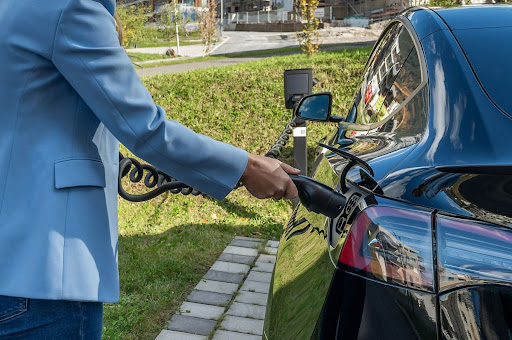
Responsible EV charging communication starts with the setup itself. If a business says it is supporting EV drivers, the chargers need to be easy to use, sensibly located and planned around the people who will actually use them.
That means thinking about staff, visitors, workplace fleets, charging access, dwell time and whether the system can grow as demand increases. A vague sustainability claim is harder to defend. A well-planned workplace charging setup is much easier to explain honestly.
From a practical planning point of view, the strongest claims usually start with clear basics: who the chargers are for, how access is managed, whether usage can be measured and what the business can genuinely evidence later.
For businesses planning chargers for employees, visitors or company vehicles, our workplace EV charging support can help with charger planning, installation and management options. Visit our workplace EV charging page to see how we can help you put the right charging setup in place before making public claims about it.
A Simple Review Before Publishing EV Charging Claims
Before publishing an EV charging claim, ask:
- Is the claim true?
- Can we prove it?
- Is the wording specific enough?
- Have we avoided broad phrases such as “green” or “eco-friendly” unless they are clearly explained?
- Have we said what the claim does and does not cover?
- Are we clear whether we mean tailpipe emissions, electricity use or wider carbon impact?
- Does the image match the real project?
- Would a reasonable reader understand the claim in the way we intend?
If the claim struggles with any of those questions, simplify it. Plain English is often the best compliance tool going. It is simpler than correcting a misleading claim later.
Talk About EV Charging With Evidence, Not Exaggeration
So, what is greenwashing? It is what happens when the environmental message gets ahead of the evidence.
For businesses, EV charging can be a useful and practical improvement. It can support electric vehicle use, help staff and visitors charge more easily, and form part of a wider approach to cleaner transport.
The key is to talk about it with care. Be specific. Keep the claim proportionate. Explain the limits. Use evidence. Avoid grand promises unless they are fully supported.
That way, EV charging becomes something better than a marketing slogan. It becomes a practical step that people can understand, trust and use.
For support planning EV charging that works in practice and can be communicated responsibly, contact The Full EV, and we’ll help you take the next step with confidence..

