
Installing EV chargers is one thing. Making sure your site can actually support them is where the real planning starts.
That is where EV charging load management comes in. It helps your business run multiple charge points without pushing your electrical supply beyond safe or practical limits. Instead of simply adding more power and hoping for the best, load management controls how much electricity your chargers use at any one time.
For many businesses, this is the difference between a reliable charging setup and a car park full of frustrated drivers staring at chargers that keep tripping, slowing down or crawling along at a snail’s pace. Hardly the smooth charging experience anyone had in mind.
At The Full EV, we help businesses plan EV charging around practical site factors, including electrical capacity, parking layout, charger usage, driver behaviour and how the system may need to grow.
What Is EV Charging Load Management?
EV charging load management is a system that controls how much power your chargers can draw from your site.
In simple terms, it prevents your EV chargers from drawing more electricity than your building can safely supply. If demand elsewhere on the site increases, the system can reduce charging output. If demand drops, chargers can speed up again.
A well-designed load management setup can include:
- A fixed power limit across all chargers
- Real-time monitoring of site demand
- Dynamic balancing between active charge points
- Priority charging for certain vehicles or users
- Scheduled charging during quieter periods
- Integration with solar PV or battery storage
This matters because EV charging is not an isolated system. It shares capacity with your lighting, heating, machinery, office equipment, catering equipment, lifts, security systems and anything else using power across the site.
Why Businesses Need to Think About Site Capacity First
An EV charger is a serious electrical load. A single charger may be straightforward enough, but multiple chargers working at the same time can place a heavy demand on your electrical infrastructure.
For example, the Energy Saving Trust’s guidance on charging business electric vehicles explains that 7kW and 22kW AC chargers are common options for vehicles parked for longer periods. That sounds simple, but once several vehicles are plugged in together, the combined demand can quickly add up.
Before installing chargers, you need to understand:
- Your existing incoming supply
- Your peak site demand
- Your available spare capacity
- The number of chargers required now
- How many chargers may be needed later
- When vehicles will actually charge
- Whether any vehicles need charging priority
A useful early question is not just “how many chargers can we fit?” It is “how much usable capacity is available when the site is already operating normally?” That means looking at existing demand, charger dwell time and whether charging can be staggered without affecting drivers.
This is why the site assessment matters as much as the charger itself. Most of the important decisions happen before the charger is even chosen.
What Happens If a Site Is Overloaded?
If chargers are installed without proper load planning, the site can run into several problems.
You may see:
- Breakers tripping when demand peaks
- Chargers are automatically slowing down
- Vehicles not being ready when needed
- Higher-than-expected upgrade costs
- Unhappy staff, visitors or fleet drivers
- Limited room for future expansion
- More disruption when the system needs correcting later
In old money, it is the electrical version of trying to boil the kettle, run the oven, turn on the tumble dryer and charge six cars from the same tired extension lead. Something is going to complain.
Good load management helps avoid that problem by matching charging demand to the supply your site can actually support.
Static vs Dynamic EV Charging Load Management
Not every business needs the same setup. Some sites have predictable demand. Others have a constantly changing mix of building use, staff charging, visitor charging and fleet charging.
| Load management type | How it works | Best for |
| Static load management | Sets a fixed maximum power limit for EV charging | Smaller sites with predictable demand |
| Dynamic load balancing | Monitors total site usage and adjusts charging in real time | Sites with changing electrical loads |
| Priority charging | Allocates more power to selected users or vehicles | Fleet vehicles, operational vehicles or essential users |
| Scheduled charging | Staggers charging by time, vehicle needs, or tariff period | Overnight charging and longer dwell times |
| Energy-integrated charging | Works with solar PV, battery storage or wider energy systems | Businesses planning long-term energy efficiency |
The right option depends on your site capacity and how your vehicles are used. There is no prize for installing the biggest charger if the site cannot support it properly.
Why Bigger Chargers Are Not Always Better
Faster charging sounds appealing. More power, less waiting. Lovely in theory.
In practice, charger speed should be based on how long vehicles are parked, how far they travel and how quickly they need to be ready again.
A vehicle parked for eight hours may not need a rapid charger. A 7kW charger could be perfectly suitable. A vehicle with a short turnaround time may need something faster.
Our guide to 7kW vs 22kW EV charging explains how charging speed, power supply and vehicle compatibility all affect the right choice. The main point is simple: charger selection should follow the use case, not the other way around.
How Dynamic Load Balancing Works
Dynamic load balancing monitors your site’s total electricity usage and adjusts EV charging output as conditions change.
If your building is using more power, the chargers slow down. If demand elsewhere drops, more power can be released back to the chargers.
This helps keep the site within a safe limit while still allowing vehicles to charge whenever capacity is available.
The government’s electric vehicle smart charging action plan highlights the wider role of smart charging in making EV charging more flexible, efficient and better aligned with the energy system.
For businesses, the practical benefit is control. You are not relying on luck, manual monitoring or drivers taking turns politely. The charger software adjusts available power automatically, within the limits set for the site.
How to Avoid Overloading Your Site
A reliable charging project should follow a clear process.
1. Review Your Electrical Capacity
Start by understanding what your site can safely support.
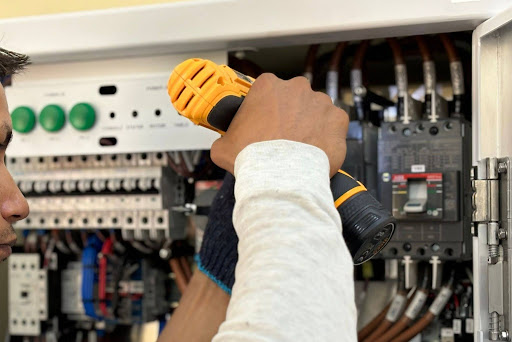
This includes the incoming supply, distribution boards, existing peak demand and any other major loads. A proper assessment helps identify whether you can install chargers within your current capacity or whether upgrades may be needed.
A stronger review should look at Maximum Demand and Authorised Capacity, not just the number of parking bays. SP Energy Networks’ guide to connecting an EV fleet explains why businesses should understand existing consumption, available capacity and whether proposed EV charging can be accommodated before moving ahead.
2. Map Vehicle Usage
Next, look at how charging will actually work day to day.
Ask:
- Who will use the chargers?
- How many vehicles need charging?
- How long will vehicles be parked?
- Which vehicles need priority?
- Will charging happen during working hours, overnight or both?
- How might demand grow over the next few years?
A fleet site, staff car park and customer-facing car park may all need different rules.
3. Choose the Right Charger Mix
A good charging setup does not always mean identical chargers in every bay.
You may need:
- 7kW AC chargers for long-stay parking
- 22kW AC chargers where the supply and vehicles support them
- Faster chargers for vehicles with shorter dwell times
- Software-controlled chargers for access and billing
- A phased layout for future expansion
For operational vehicles, charging design should reflect how vehicles are actually used, including downtime, return-to-base patterns and daily mileage. Our fleet EV charging solutions are designed around those practical charging needs.
4. Add Smart Software Controls
Software makes charging easier to monitor, manage and adapt.
With the right system, you can control access, track usage, set tariffs, view charger performance, and manage different user groups. Our EV charging software management support helps businesses bring charge point management, payments and data into one more manageable setup.
That is particularly useful when staff, visitors, tenants and company vehicles all need different access or pricing rules.
5. Plan for Future Demand
EV charging should not only solve today’s problem. It should leave room for tomorrow.
That means considering spare capacity, cable routes, ducting, additional bays, software scalability and whether energy storage may support future charging growth.
Good planning now can reduce disruption later. Nobody wants to dig up the same car park twice. Once is quite enough character-building for everyone involved.
A proper site review is often the difference between a charging setup that works quietly in the background and one that causes problems as soon as demand increases. That is why our business and commercial EV charger installation support looks beyond the charger itself. We consider your available capacity, parking layout, driver needs, future charging demand and the management software required to keep everything running sensibly.
If you are planning chargers for staff, visitors, tenants or fleet vehicles, that service page is a useful next step for understanding how a commercial charging project can be planned from survey through to installation and ongoing support.
When a Supply Upgrade May Still Be Needed
Load management can do a lot, but it cannot create capacity that simply is not there.
Some sites will still need a supply upgrade, especially where there are large fleets, rapid chargers, heavy operational loads or limited existing capacity.
The point of load management is not to avoid upgrades at all costs. It is to make sure any upgrade is properly justified.
For many sites, good load management may help avoid, delay or better define electrical upgrades, depending on the available capacity and charging demand. In plain English, the sooner capacity is assessed, the fewer surprises you are likely to get later.
How Battery Storage Can Support EV Charging
Battery storage can also play a useful role in EV charging load management.
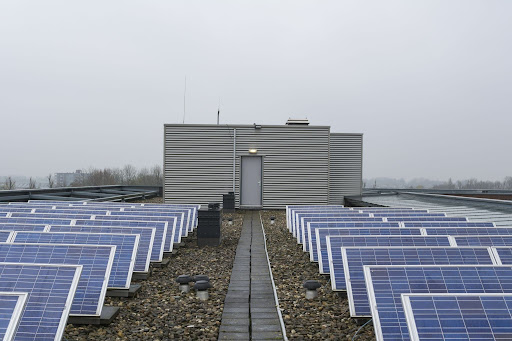
A battery can store electricity and release it when site demand is high or when chargers need extra support. When combined with solar PV and smart charging, it can help businesses make better use of their own energy and reduce pressure on the grid connection.
Where battery storage is suitable, it can support a wider energy plan by helping businesses manage demand and make better use of stored electricity.
Battery storage will not be right for every site, but it is worth considering where charging demand, energy costs, and future expansion are all part of the picture.
Common EV Charging Load Management Mistakes
Most problems can be avoided with better planning at the start.
Common mistakes include:
- Choosing charger speeds before checking site capacity
- Installing more chargers than the supply can support
- Treating all users and vehicles the same
- Ignoring peak building demand
- Forgetting future charger expansion
- Overlooking billing, access control and reporting
- Assuming a supply upgrade is always the only answer
- Leaving load management until after problems appear
Drivers should be able to plug in and get on with their day. The control work should happen quietly in the background.
Plan EV Charging Load Management Before the First Charger Goes In
EV charging load management helps businesses install chargers without overwhelming their electrical infrastructure.
It allows you to balance charging speed, available power, driver needs, and future growth practically. For many sites, it may reduce unnecessary upgrade work, improve reliability and make EV charging easier to manage long term, but the right outcome depends on the site’s existing capacity and charging requirements.
At The Full EV, we look at the full picture before recommending a solution. That includes your site capacity, charging goals, vehicle use, software needs, installation requirements and future expansion plans.
You can also view our EV charging case studies to see how different organisations have approached charging infrastructure in practice.
If your business is planning EV charging and you want a setup that works properly from day one, contact us, and we’ll help you design it in a sensible way.

