
Becoming carbon neutral is no longer something reserved for large corporates or long-term sustainability reports. It is now a practical goal for businesses of all sizes, whether driven by rising energy costs, client expectations, or the need to stay competitive.
For many, the challenge is not understanding why it matters. It is knowing how to approach it properly, without overcomplicating the process or relying on surface-level actions that do not deliver real change.
At its core, becoming carbon neutral is about understanding your emissions, reducing them where possible, and balancing what remains in a credible way. Done well, it becomes part of how your business operates, rather than a one-off project.
What does carbon neutral actually mean?
Carbon neutrality means balancing the greenhouse gases your business produces with the amount you remove or offset. In simple terms, what you emit is matched by what you take out of the atmosphere.
However, there is an important distinction. Offsetting should not be the starting point. The priority is always to reduce emissions first, then deal with what cannot be eliminated.
In the UK, frameworks such as Streamlined Energy and Carbon Reporting help guide businesses through measuring and reporting emissions in a structured way. You can find more detail here: https://www.gov.uk/guidance/streamlined-energy-and-carbon-reporting-secr-for-academy-trusts
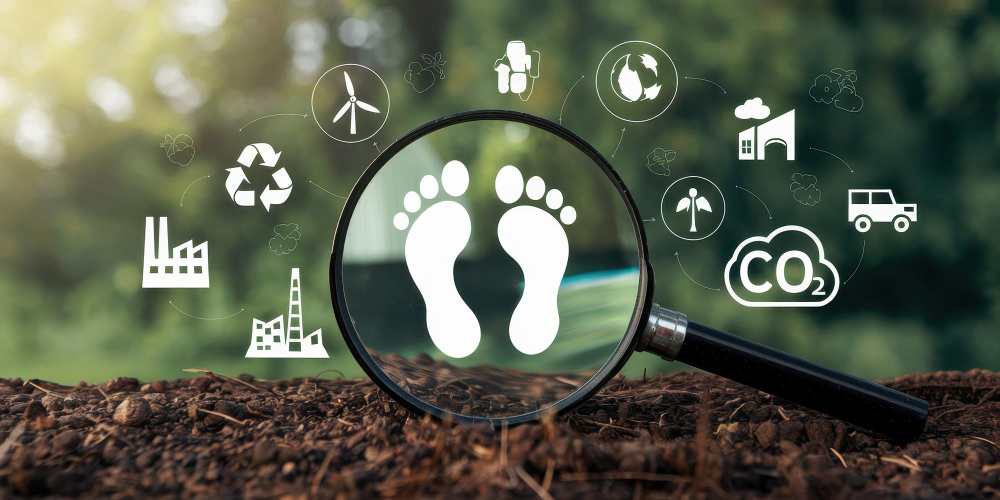
Step 1: Measure your carbon footprint
Before making any changes, you need a clear understanding of where your emissions come from. Most businesses will find their footprint sits across three main areas.
Direct emissions include fuel used in company vehicles or gas used for heating. Indirect energy emissions come from electricity used across offices, warehouses, or operational sites. Indirect value chain emissions include things like staff commuting, deliveries, and supplier activity.
In reality, many businesses are surprised by how much comes from transport. Company vehicles, site visits, and logistics can quickly add up, especially for businesses with mobile teams.
At this stage, perfection is not the goal. A clear, honest overview is enough to highlight where the biggest opportunities sit.
Step 2: Reduce emissions at source
This is where meaningful progress happens. Reducing emissions not only supports sustainability goals, it often improves efficiency and reduces operating costs.
For many businesses, transport is the most practical place to start.
Switching from petrol or diesel vehicles to electric vehicles can significantly reduce direct emissions. It also tends to reduce fuel spend and maintenance costs over time.
The challenge is making that transition work day to day. This is where charging becomes critical.
Installing workplace EV charging removes much of the uncertainty. Instead of relying on public charging, businesses can control when and how vehicles are charged. Drivers can start each day with a full battery, and charging becomes part of the routine rather than something that needs planning around.
At The Full EV, this is often the turning point. Businesses that were hesitant about EV adoption become far more confident once charging is in place.
Workplace charging also supports employees who are considering switching to electric vehicles themselves. It creates a wider shift, not just within the fleet but across the workforce.
If you are exploring this as a first step, you can find more about workplace EV charging here: https://thefullev.co.uk/workplace/
Once transport is addressed, energy usage is usually the next area to focus on.
Many businesses are still operating with systems that use more energy than necessary. Simple changes can make a noticeable difference. Upgrading lighting to LED, installing smart heating controls, and replacing inefficient equipment are all practical steps that reduce both emissions and costs.
Switching to renewable electricity is another important move. This might involve moving to a renewable tariff or installing solar panels on-site. For businesses with EV charging, solar can be particularly effective, allowing vehicles to be powered by energy generated on-site during the day.
The UK Government provides further guidance on improving energy efficiency here: https://www.gov.uk/improve-energy-efficiency
Step 3: Offset what remains
After reducing emissions as much as possible, the remaining carbon can be offset.
Offsetting involves supporting projects that reduce or remove carbon elsewhere, such as tree planting, renewable energy developments, or carbon capture initiatives.
It is important to choose schemes that are credible and verified. The Woodland Carbon Code is one recognised UK standard that provides transparency around offsetting projects: https://woodlandcarboncode.org.uk
Offsetting should be seen as the final step, not the main strategy. It works best when combined with genuine reductions.
A practical example
To make this more tangible, consider a typical small to mid-sized business.
The process might begin with a basic emissions review, highlighting transport and energy as the largest contributors. The business then starts transitioning part of its fleet to electric vehicles. To support this, it installs workplace EV chargers, making day-to-day charging simple and reliable.
At the same time, it improves energy efficiency within its premises by upgrading lighting and reviewing heating systems. It then moves to a renewable electricity tariff to reduce indirect emissions.
Finally, any remaining emissions are offset through a verified scheme.
This approach is not about doing everything at once. It is about making steady, meaningful progress.
Common mistakes to avoid
One of the most common issues is trying to do too much too quickly. This often leads to delays or incomplete strategies. Focusing on high-impact areas first tends to deliver better results.
Another mistake is relying too heavily on offsetting. Without reducing emissions, offsetting alone can feel superficial and may not stand up to scrutiny.
Planning is also important. For example, installing EV chargers without considering future demand can lead to limitations later. Businesses often find that once charging is available, adoption increases more quickly than expected.
Finally, it is easy to overlook behaviour. Staff habits, such as energy usage or travel choices, can influence overall emissions more than expected.
Why this matters commercially
Carbon neutrality is often framed as an environmental goal, but it also makes commercial sense.
Businesses taking steps to reduce emissions often see lower fuel and energy costs. They may also find it easier to win work, particularly where sustainability is part of the procurement process.
There is also a reputational benefit. Customers and clients are increasingly aware of environmental impact, and businesses that take action tend to stand out.
Over time, these factors combine to create a stronger, more resilient business.
Taking the first step
For many businesses, the hardest part is getting started.
Focusing on the biggest areas of impact makes the process more manageable. In most cases, transport is one of those areas.
Installing EV charging and beginning the transition to electric vehicles is one of the most practical and visible steps a business can take. It delivers immediate benefits while creating a foundation for further improvements.
At The Full EV, we work with businesses across South Wales to make that transition straightforward, from initial advice through to installation and ongoing support.
If you are considering how to move forward, exploring business EV charging is a strong place to start.
This article is for general information purposes only. Businesses should seek professional advice tailored to their specific circumstances when planning carbon reduction strategies.

