
Regenerative braking is one of those electric car features that sounds more technical than it feels once you have used it.
In simple terms, regenerative braking helps an electric or hybrid vehicle slow down while recovering some of the energy that would normally be lost as heat through the brakes. Instead of wasting all of that movement energy, the car uses its electric motor to send some of it back into the battery. It is clever engineering, but it still has limits. You still need normal brakes, good judgement and a sensible driving style.
The Quick Answer
Regenerative braking is a system that helps an electric or hybrid vehicle recover energy when the car slows down.
When you lift off the accelerator or press the brake pedal, the electric motor can work in reverse. Instead of using electricity to turn the wheels, the turning wheels help drive the motor. The motor then acts like a generator, creating electricity that can be sent back to the battery.
The official GOV.UK guide to driving an electric or hydrogen-powered vehicle explains that many zero-emission vehicles use regenerative braking, where kinetic energy is used to recharge the battery during deceleration and braking. That is the basic idea: slow the car down, recover some energy and use it again later.
How Regenerative Braking Works
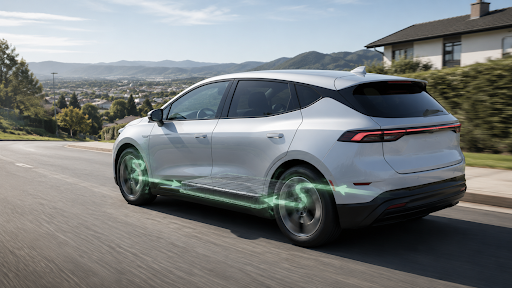
A petrol or diesel car usually slows down by using friction brakes. The brake pads press against the brake discs, creating friction. That friction slows the car, but it also turns movement energy into heat. An electric vehicle can do something smarter.
Because an EV already has an electric motor, the car can use that motor to resist the movement of the wheels. That resistance slows the car. At the same time, the motor produces electricity.
Here is the simple version:
- You lift off the accelerator or press the brake.
- The electric motor changes role.
- The wheels help turn the motor.
- The motor produces electricity.
- The battery stores some recovered energy.
- The car slows down.
It is still braking, just with less energy going straight to waste.
What Does Regenerative Braking Feel Like?
The first time you drive an EV, regenerative braking can feel a little unusual.
In some cars, lifting off the accelerator creates only gentle slowing. In others, the car slows quite strongly, almost as if you have pressed the brake pedal. Many EVs let you adjust the strength of regeneration through drive modes, paddles or touchscreen settings.
You may see terms such as:
- Low regen
- High regen
- One-pedal driving
- B mode
- Brake energy recovery
- Adaptive regeneration
Manufacturers use different names, so the wording can vary from one model to another.
With stronger regeneration, you can often drive smoothly by easing on and off the accelerator rather than constantly moving between accelerator and brake. This is sometimes called one-pedal driving, although the brake pedal is still there and still important.
In everyday driving, most people notice regenerative braking most when they first lift off the accelerator in town traffic. After a few journeys, it usually feels less like a technical feature and more like part of the car’s normal rhythm.
Does Regenerative Braking Replace Normal Brakes?
No. Regenerative braking does not replace normal brakes.
Electric vehicles still have friction brakes, usually discs and pads, just like petrol and diesel cars. These are needed for heavier braking, emergency stops, low-speed manoeuvres and situations where regeneration is limited.
The Energy Saving Trust’s electric cars guidance explains that regenerative braking recharges the battery using the vehicle’s kinetic energy when slowing down. It also notes that this can reduce wear and tear on standard friction brakes.
In normal driving, the car may blend regenerative braking and friction braking together. In gentle slowing, regeneration may do much of the work. In harder braking, the mechanical brakes step in more.
When Is Regenerative Braking Most Useful?
Regenerative braking is most useful when you slow down often.
That means it tends to help most in:
- Town driving
- Stop-start traffic
- Approaching junctions
- Slowing for roundabouts
- Driving downhill
- Roads where speed changes often
On a long, steady motorway run, there are fewer chances to recover energy because you are not slowing down as much. In slower traffic, where speed rises and falls more often, regenerative braking has more opportunities to help.
It will not transform an EV’s range on its own, but it can support better efficiency.
What Regenerative Braking Can and Cannot Do
Regenerative braking is useful, but it is not a free energy machine.
It can recover some energy that would otherwise be lost, but it cannot recover all of it. Some energy is still lost through heat, rolling resistance, air resistance and the limits of the system itself.
| Regenerative braking can help with | It cannot do this |
| Recovering some energy while slowing down | Recovering all the energy used to accelerate |
| Reducing the use of friction brakes in some situations | Removing the need for normal brakes |
| Supporting smoother EV driving | Guaranteeing a longer range in every journey |
| Improving efficiency in stop-start driving | Replacing sensible driving habits |
Good driving still matters. Looking ahead, easing off early and avoiding harsh acceleration will usually do more for efficiency than relying on regeneration at the last moment.
Does Regenerative Braking Help EV Range?
Yes, but with a bit of caution around the word “range”.
Regenerative braking can help improve efficiency because it recovers some energy when the car slows down. That recovered energy can be used again, which can support the range over a journey.
However, the benefit depends on many factors, including:
- Driving style
- Traffic conditions
- Vehicle weight
- Battery state of charge
- Battery temperature
- Road gradient
- Regeneration settings
- How often does the car slow down
So, while regeneration can help, it should not be treated as a fixed-range boost.
If you are trying to reduce running costs, regenerative braking is only one part of the picture. Charging habits, tariff choice, tyre pressure, journey planning and driving style all matter too. Our guide on maximising savings when running an electric car looks at the wider picture.
Is Regenerative Braking Good For The Battery?
In normal use, regenerative braking is part of how electric vehicles are designed to operate.
The car’s battery management system controls how much energy can be accepted, based on conditions such as temperature and battery charge level. If the battery is very full or too cold, the car may reduce regenerative braking because there is less room or less ideal conditions for taking energy back.
That is why some drivers notice regeneration feels weaker on a cold morning or when the battery is already close to full.
Battery ageing depends on many factors, including temperature, charging habits, battery chemistry and how the vehicle manages energy flow. For everyday drivers, the safest approach is to follow the manufacturer’s guidance and let the car manage regenerative braking as designed.
For a broader look at EV batteries, our article on what type of battery is used in electric vehicles explains the battery technology behind modern EVs
What To Check When Choosing An EV
If you are comparing electric cars, regenerative braking is worth paying attention to during a test drive.
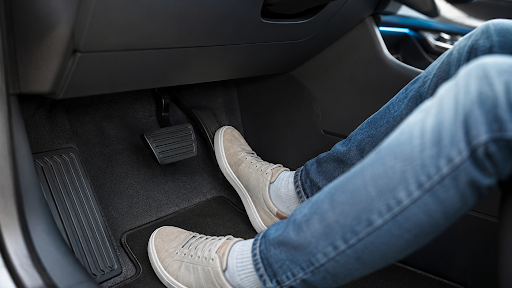
Check whether the car offers adjustable regeneration settings. See how naturally it slows when you lift off. Try low-speed manoeuvres. Notice whether the brake pedal feels smooth when the car blends regeneration and friction braking.
Some drivers love strong one-pedal driving. Others prefer a more traditional feel. Neither is wrong.
The Full EV’s electric car reviews can also help you compare how different models suit real driving needs, which is helpful because regenerative braking can feel different from one car to another. Our guide to understanding EVs is also a useful starting point if you are still getting familiar with the basics.
Thinking About Your First Electric Car?
Regenerative braking is one of the features that make EV driving feel different from driving a petrol or diesel car. Once you get used to it, it can make everyday driving smoother and more efficient.
If you are looking at making the switch, the right car matters just as much as the headline range figure. Battery size, charging speed, driving feel, boot space, running costs and how the car handles regeneration can all affect whether it suits your routine.
When comparing models, it is worth looking beyond range figures and finance terms. The cars available through electric car leasing can vary in how they handle regenerative braking, charging speed, comfort and everyday usability, so the driving feel matters as much as the numbers on paper.
Final Thoughts
Regenerative braking helps an electric or hybrid vehicle recover some energy that would otherwise be lost when slowing down.
It is not a miracle range extender, and it does not replace normal brakes. But used well, it can support better efficiency, smoother driving and a calmer feel behind the wheel.
If you are comparing EVs, do not just look at range and charging speed. Pay attention to how the car feels when it slows down. That little detail can make a big difference in daily driving.
FAQs
What Is Regenerative Braking In Simple Terms?
Regenerative braking helps an electric or hybrid car recover some energy when slowing down. The car uses the electric motor like a generator and sends some electricity back to the battery.
Does Regenerative Braking Charge The Battery?
Yes, it can send some recovered energy back into the battery. It does not fully recharge the battery, but it can improve efficiency during normal driving.
Do Electric Cars Still Have Brake Pads?
Yes. Electric cars still have normal friction brakes for stronger braking, emergency stops and situations where regeneration is limited.
Is One-Pedal Driving The Same As Regenerative Braking?
One-pedal driving uses strong regenerative braking to slow the car when you lift off the accelerator. It is a feature made possible by regeneration, but the brake pedal is still needed for some situations.
Does Regenerative Braking Work In Cold Weather?
It can, but regeneration may be reduced when the battery is cold or nearly full. The car manages this automatically to protect the battery and maintain safe operation.

